
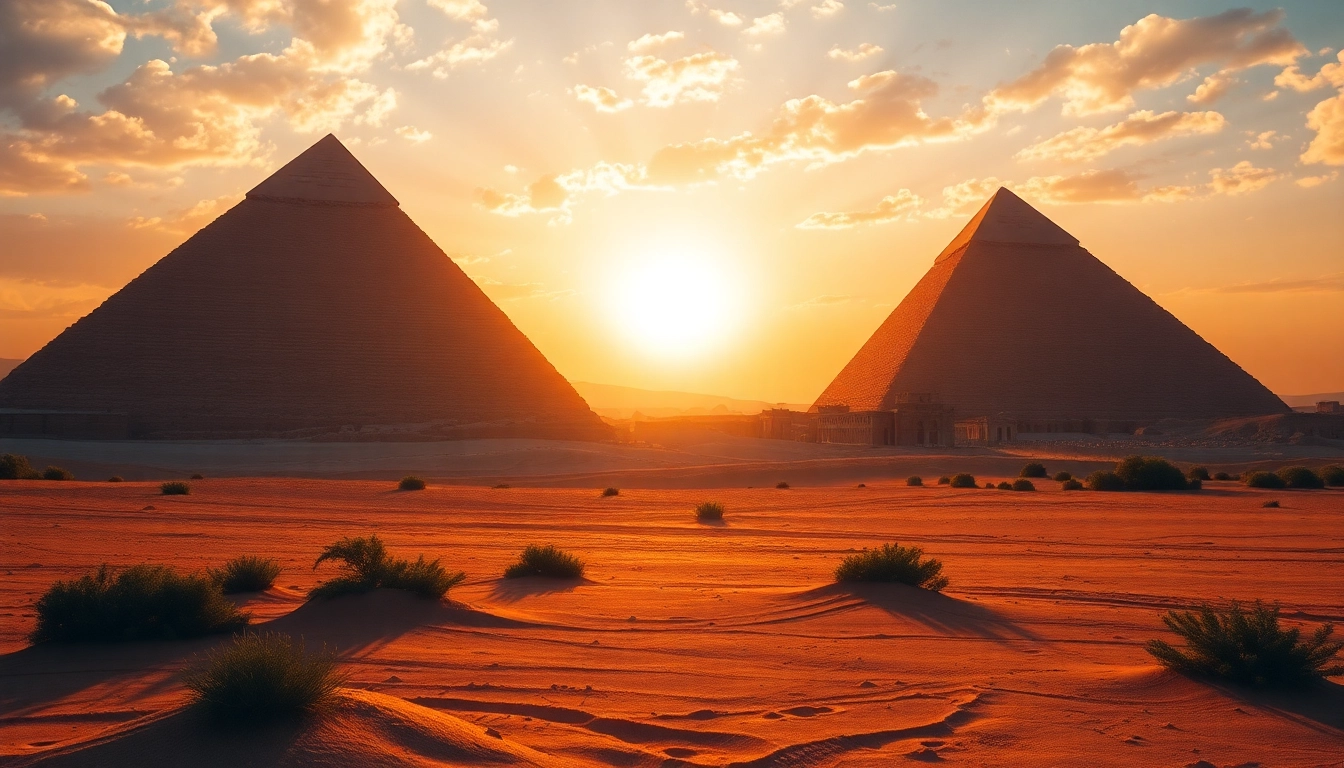
Introduction to the Pyramids of Giza
The Pyramids of Giza, standing majestically along the Giza Plateau, are perhaps the most recognizable symbols of ancient Egypt. These monumental constructions are not merely tombs; they are a testament to the architectural prowess and the cultural depth of a civilization that thrived over thousands of years ago. Their grandeur and mystique continue to captivate historians, archaeologists, and tourists from around the globe, feeding a sustained interest in Egypt’s past. For those looking to delve deeper into the world of the pyramids, a visit to https://piraminds.com/ offers a wealth of knowledge and insights.
Historical Background
Constructed during the third millennium BCE, the Pyramids of Giza were designed as elaborate burial sites for the pharaohs. The most famous of these is the Great Pyramid, built for Pharaoh Khufu around 2580-2560 BCE. This site served not only as a tomb but also as a launching point into the afterlife, reflecting the Egyptians’ beliefs in immortality and their reverence for their rulers. The pyramids, constructed from limestone and granite, also served as a demonstration of the pharaoh’s power, aimed at perpetuating their legacy and securing their status among the gods.
Architectural Significance
Each pyramid showcased significant advancements in engineering and architecture. The geometric precision of the Great Pyramid alone, with its square base and alignment with the cardinal points, illustrates the Egyptians’ exceptional understanding of mathematics and astronomy. The pyramid’s original casing stones were polished Tura limestone, which vividly reflected the sun, symbolizing the rays of the sun and the connection of the pharaohs to the divine. Additionally, the architectural innovations seen in the construction of the pyramids laid the groundwork for future monumental projects across Egypt.
Cultural Importance
The cultural resonance of the pyramids extends beyond their architectural grandeur. They embodied the complex religious beliefs of ancient Egyptians, reflecting their views on death and the afterlife. The pyramids were part of a larger funerary complex that included mortuary temples, supporting structures, and massive walls. These sites were considered sacred spaces, designed to assist the pharaoh’s journey into the afterlife, thus ensuring continuity of life beyond death and embodying the cultural values of the time.
Construction Techniques of the Pyramids
Materials Used
The construction of the Pyramids of Giza involved the use of locally sourced materials, primarily limestone and granite. The core of the pyramids was built with limestone blocks, while the casing stones were polished limestone, giving the structure a brilliant shine. Transporting these heavy materials to the construction site posed a significant challenge but was accomplished using sleds and likely lubricated pathways to reduce friction. Some of the massive granite blocks were quarried further south in Aswan, highlighting the Egyptians’ advanced logistical and engineering capabilities.
Labor Force and Techniques
Contrary to the popular myth of slaves building the pyramids, historical evidence suggests that a skilled labor force comprised primarily of seasonal workers built these structures. Estimates range from 20,000 to 30,000 laborers, and they were organized into teams with specialized roles such as stone cutters, haulers, and builders. Archaeological discoveries of workers’ villages near the pyramids indicate that laborers were well-fed and cared for, further dispelling myths surrounding their construction.
Modern Theories on Construction
Modern archaeology continues to explore the techniques employed in pyramid construction. New findings suggest that ramps, potentially combined with levers, might have been used to maneuver the massive stones into place. Recent investigations into the workforce’s organization, engineering techniques, and logistical solutions showcase an advanced civilization with noteworthy problem-solving skills. Some theories even propose the use of internal ramps, offering a deeper understanding of the innovative methods that could have facilitated the gigantic constructions.
The Mysteries Surrounding the Pyramids
Unexplained Features
The pyramids are filled with unexplained phenomena that continue to intrigue scientists and researchers. Features such as the Grand Gallery within the Great Pyramid, the alignment of the burial chambers, and the discovery of hidden voids contribute to this intrigue. These voids, revealed through advanced scanning technologies, suggest that there may still be significant, unexplored sections of the pyramids, hinting at undiscovered chambers or tunnels that have been hidden for millennia.
Recent Discoveries
In recent years, archaeological explorations have unveiled astonishing finds surrounding the Pyramids of Giza. Researchers have discovered a series of ancient canals around the site, which likely played a crucial role in transporting materials to the construction site. Additionally, modern technology has allowed scientists to map previously inaccessible areas within the pyramids, contributing to the growing body of knowledge surrounding their construction and purpose.
Theories of Extraterrestrial Influence
A fascinating and often sensational theory surrounding the Pyramids of Giza is the speculation of extraterrestrial influence on their construction. While such claims lack substantial evidence, the architectural precision and enormous scale of the pyramids are sometimes seen as too advanced for the time period. This idea fuels ongoing discussions about ancient civilizations’ capabilities and encourages a broader interest in the mysteries of the universe and human achievement.
Visiting the Pyramids Today
Best Times for Tourists
Visiting the Pyramids of Giza is a must for any traveler interested in history and culture. The best times to visit are during the cooler months, from October to April, when Cairo’s weather is more agreeable for exploration. Early mornings or late afternoons are particularly favorable, allowing visitors to experience the pyramids with fewer crowds and stunning lighting for photographs.
What to Expect on a Visit
Tourists can expect an awe-inspiring view of the pyramids rising against the desert backdrop. Guided tours are recommended to garner deeper insights into the historical context and unique architectural features of the sights. Visitors should prepare for significant walking and climb opportunities, with options available to explore various structures surrounding the main pyramids, including the Sphinx and smaller nearby pyramids.
Responsible Tourism Practices
As global interest in the pyramids continues to surge, embracing responsible tourism practices is critical. Visitors should respect the integrity of the historical site by adhering to posted guidelines, avoiding climbing on the pyramids, and minimizing their environmental footprint. Engaging with local guides not only enhances the experience but also supports the community surrounding this UNESCO World Heritage site, fostering economic stability for the region.
FAQs About the Pyramids of Giza
How were the Pyramids of Giza built?
The construction involved skilled labor and simple tools, relying on vast teams managed by the state, contrary to common myths.
What is the purpose of the Pyramids?
Primarily built as monumental tombs for pharaohs, serving as gateways to the afterlife according to ancient Egyptian beliefs.
Are there more pyramids in Egypt?
Yes, Egypt is home to numerous pyramids, including those at Saqqara and Dahshur, each with its unique historical significance.
What’s the best way to experience the pyramids?
Guided tours offer historical insights, but visiting early or late in the day can provide a more personal and intimate experience.
Is climbing the pyramids allowed?
Climbing the pyramids is strictly forbidden to preserve their integrity and protect visitors; respect the posted guidelines.